
Three jobs that sound alike
Brick chimneys in Orange County wear out from the top down. Sun bakes the mortar, winter rain soaks it, and every few years a quake gives the whole stack a shake. By the time an owner in Tustin calls us, the mortar is sandy, a few bricks rock under a finger, or a crack has opened above the roofline. At that point the choice is usually one of three masonry jobs, and they are very different in scope and cost.
- Repointing. Grinding out failed mortar joints and packing in new mortar. The bricks stay. The structure stays.
- Partial rebuild. Taking the chimney down to a sound course, often the roofline, and laying it back up with new or reclaimed brick, a new crown and new flashing.
- Full rebuild. Removing the chimney to the firebox or the foundation and building it again, sometimes in a lighter form.
All three are priced by written estimate after an inspection. None of them has a fixed price, because the height, the brick and the access change every time.
When repointing is enough
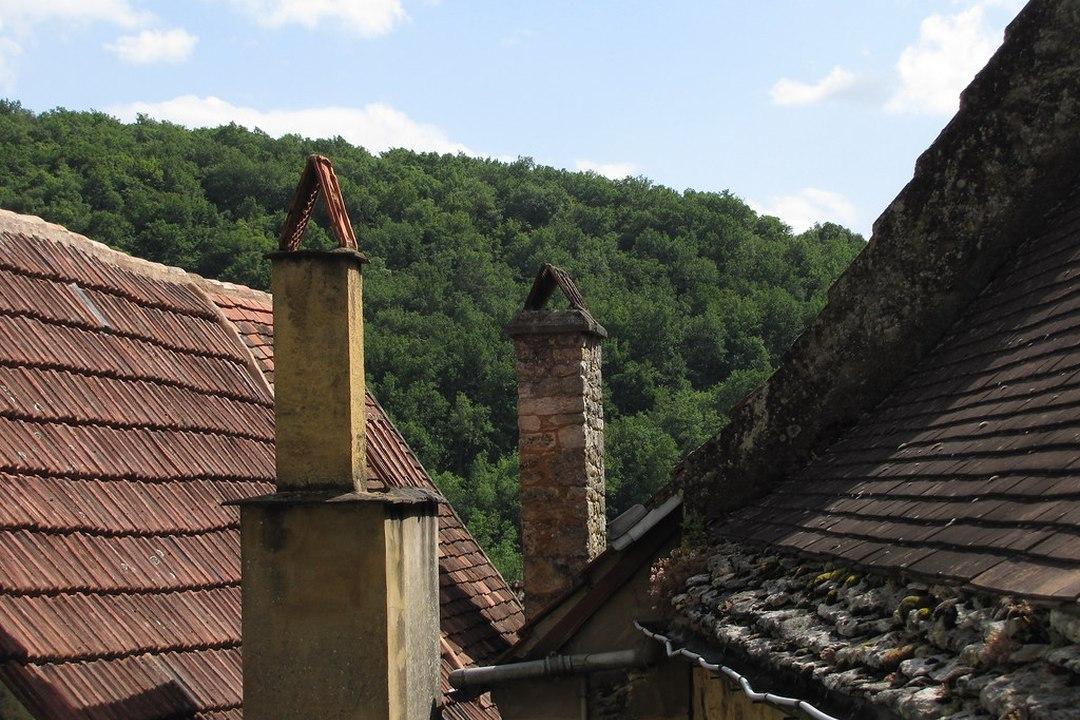
Repointing works when the bricks themselves are sound and the chimney is straight. Tap a brick and it rings rather than crumbles. The stack does not lean. Cracks follow the mortar lines in a stepped pattern instead of running through the bricks.
On those chimneys, masonry repair is the cheapest way to stop water getting into the stack. We match the mortar to the brick: a softer lime-rich mix on older soft brick, a standard mix on newer work. Using a hard modern mortar on soft brick is a common mistake that makes the brick faces spall off within a few winters, so we name the mix in the estimate.
Repointing can also be staged. The face that takes the weather often fails first. We can repoint that face now and leave the sheltered faces for later. The estimate shows both the one-face figure and the whole-stack figure.
When the top has to come down
If the bricks above the roofline are loose, the crown is gone, and the top courses move when we push on them, repointing will not hold. The mortar has nothing solid to grip. That is where a partial rebuild comes in.
We take the chimney down to the first sound course, usually at or just above the roof, and build it back. A new cast crown goes on top with a drip edge, and new step and counter flashing ties it into the roof. This is also the point to fit a proper chimney cap, quoted after we measure.
Owners sometimes ask us to rebuild the top only to the old height. Others ask for a lower stack. A shorter chimney carries less weight above the roof, which matters in a quake, but it still has to clear the roof by the distance code requires. We write both heights into the estimate when both are possible.
Earthquakes and the upper stack
Southern California chimneys took real damage in the 1987 Whittier Narrows and 1994 Northridge quakes, and the damage was mostly above the roofline, where an unbraced brick stack acts like a lever. Many older chimneys in central Orange County still have that unbraced upper section.
A chimney seismic retrofit addresses it in a few general ways: steel bracing or straps that tie the stack back to the roof framing, or a rebuild of the upper section to the roofline in a lighter form, such as a framed chase with a metal flue. We describe the options in plain terms and price each one. We do not promise rebates or cite code sections we have not checked for your city; your building department has the final word on any permit.
When a full rebuild is the honest answer
A full rebuild is the largest job we quote, and we only suggest it when the problems run the whole height of the stack: a chimney that leans, cracks through the bricks from top to bottom, a firebox and smoke chamber that are falling apart at the same time as the top. At that point patching each problem separately costs more over a few years than starting again.
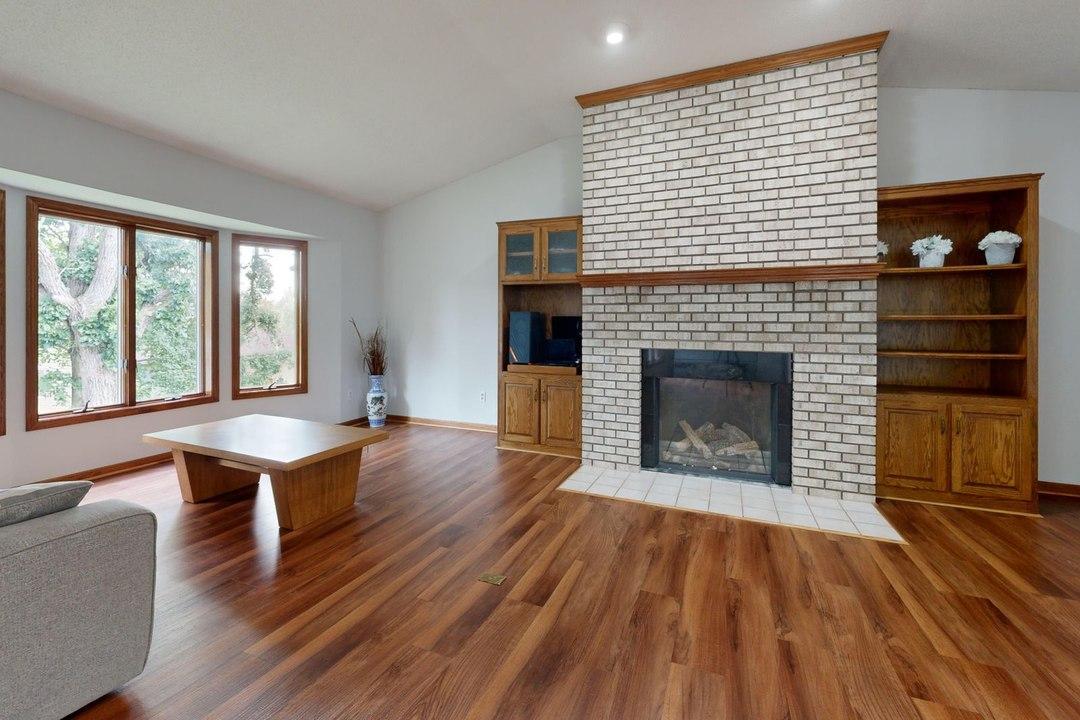
A chimney rebuild is also the moment to rethink how you want to use the fireplace. Some owners rebuild for wood. Many in Orange County switch to gas, because under South Coast AQMD Rule 445 new wood-burning fireplaces in new construction are restricted. Switching to gas costs $2,700 to $5,450 for an insert fitted to the old firebox, or $4,350 to $8,700 when a sealed direct-vent unit goes on a new wall. The estimate can show the rebuild for wood and the gas route side by side.
What we look at before writing the options
The choice between these three jobs is made on the roof, not on the phone. A Level 2 inspection, at $380, gives us the full picture: the flue on camera, the crown, the top courses, the flashing, and the chimney where it passes through the attic. From that, the written estimate shows each option that applies, with the trade-offs in a sentence or two.
If you already have a home inspection report or photos, start there. Send photos of the top of the chimney and any cracks for a written quote. We will tell you whether a Level 1 or a Level 2 is the right next step and what the visit will settle.
Mistakes that cost owners money
- Repointing a chimney that needs its top rebuilt. The new mortar looks good for a year and then cracks along the same lines.
- Rebuilding a whole chimney when only the top was loose.
- Sealing a stack with a cheap coating that traps water behind the brick face.
- Leaving the flashing for a separate trade, so the roof and the chimney are fixed at different times and leak at the joint.
Each of these is avoidable when the estimate names the cause, not just the symptom.
Book a masonry visit
We are based in Tustin and work in Santa Ana, Costa Mesa and Mission Viejo. For a staged plan on a bigger job, see our up to code repairs page, or read what chimney repair costs. When you are ready, call (657) 213-6989 and we will set up the inspection.
Want This Priced for Your Chimney?
Bellamy Chimney Group inspects chimneys from Tustin and writes up each repair at the levels that make sense, with a plain note on what can wait. Call and tell us what you have noticed.